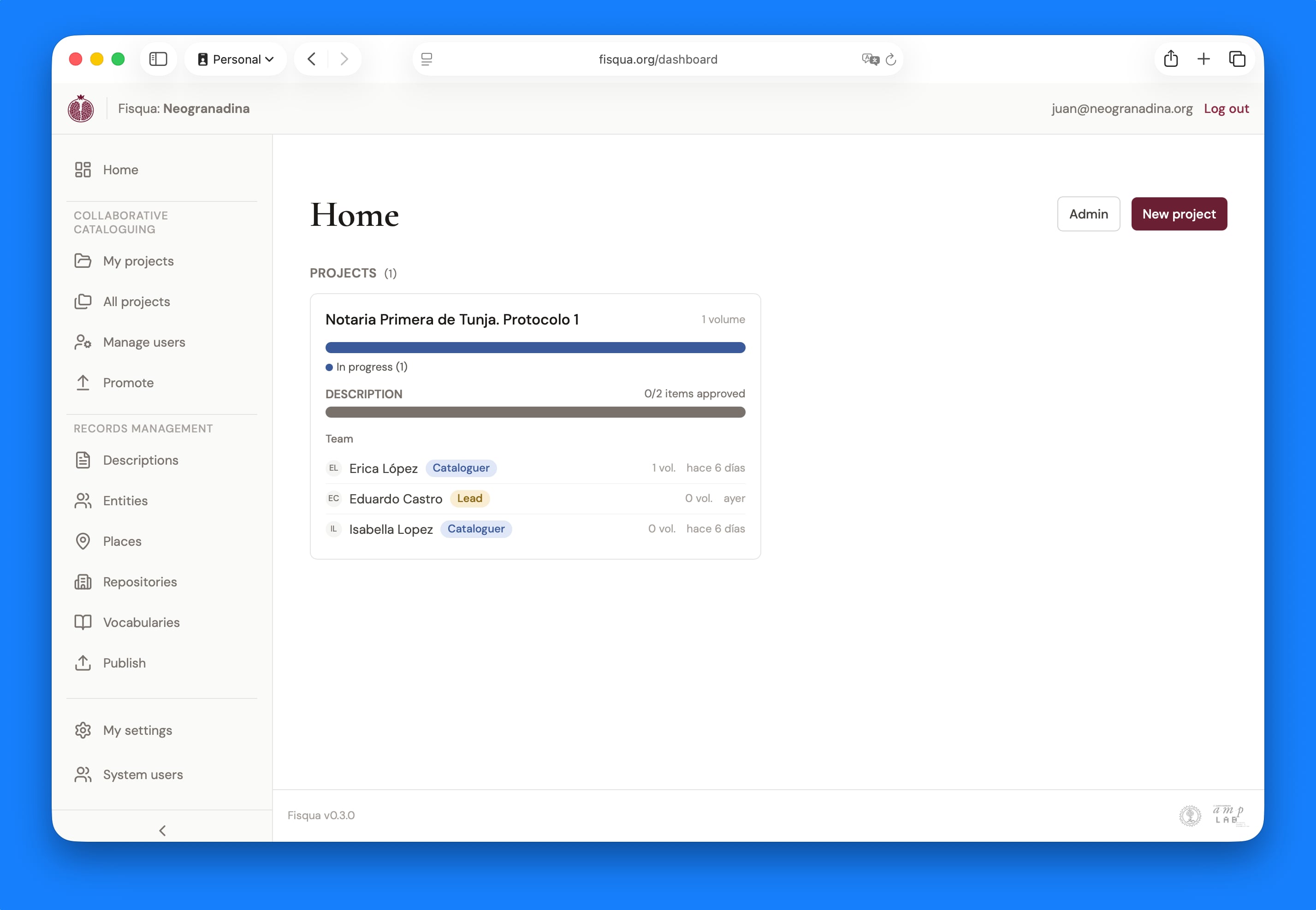
Fisqua is AMPL’s tool for archives to do the work of cataloging — describing materials, managing authorities and controlled vocabularies, and assembling the hierarchies that hold a collection together. It is one of the four open-source primitives AMPL develops with its partners, alongside the Digitization Toolkit, which captures, Zasqua, which publishes, and Telar, which tells. The four are designed to work together as a full pipeline, but each can be used independently — with other tools, or on its own — depending on what an archive needs.
Fisqua describes materials in ISAD(G) and authorities in ISAAR(CPF), serves images as IIIF, wraps preservation metadata in METS, and exports to EAD and EAC-CPF. These are not Fisqua’s inventions but the standards the international archival community has settled on, and using them means that a collection cataloged in Fisqua is portable from day one. The primitive — the schema, the data formats, the workflow — is open regardless of what software an archive uses to run it; the work an archivist puts into Fisqua belongs to them.
One feature at the heart of Fisqua distinguishes it from most archive management platforms: it is designed to open description work to volunteers, students, and community members under professional archival review. This emphasis has come out of more than a decade of practice — working with UCSB undergraduates to catalog endangered archives in Latin America, and with Neogranadina’s network of volunteers around the world — and we call it Collaborative Cataloging. A convener assigns items; contributors describe them against the catalog’s controlled fields and vocabularies; the convener reviews and approves entries before they enter the catalog. Three things come out of this at once: archival description produced at a scale few institutions can resource on their own; hands-on training in the core skills of historical archival work — paleography, description, and authority work — that are otherwise hard to come by outside professional programs; and a practice of archiving that stays open to the communities and publics whose materials are being described.
AMPL operates one such implementation: a hosted, multi-tenant Fisqua that partners use without maintaining servers of their own. It runs on Cloudflare Workers, D1, and R2 — a minimal-computing stack that keeps the per-tenant cost of a serious catalog low enough to offer to archives that could not otherwise afford one. For institutions that prefer to run the primitive themselves, the schema and the tooling that turns cataloged data into an exportable archive are available as open source: a partner that begins on the hosted Fisqua can leave with everything they have put in.
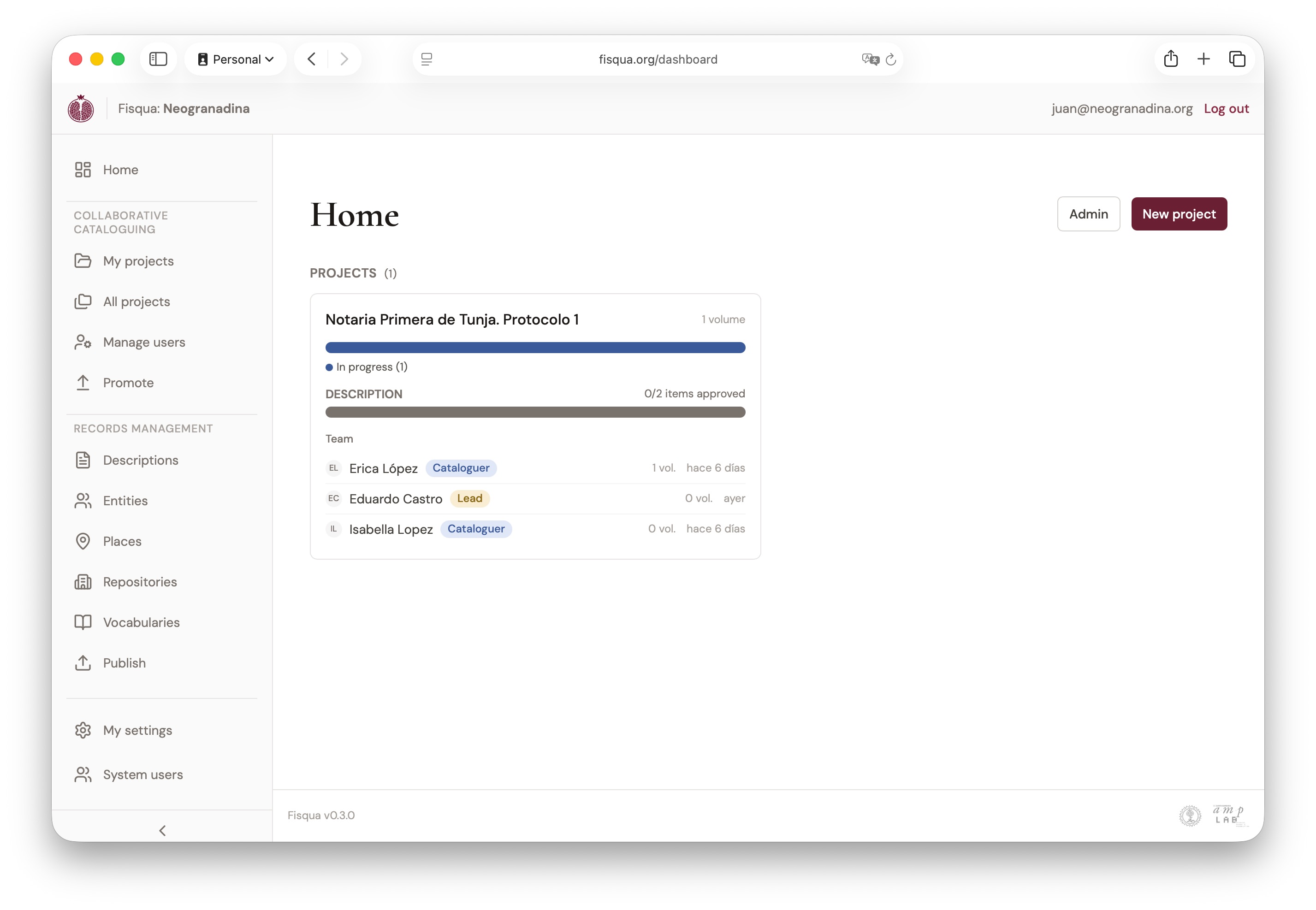
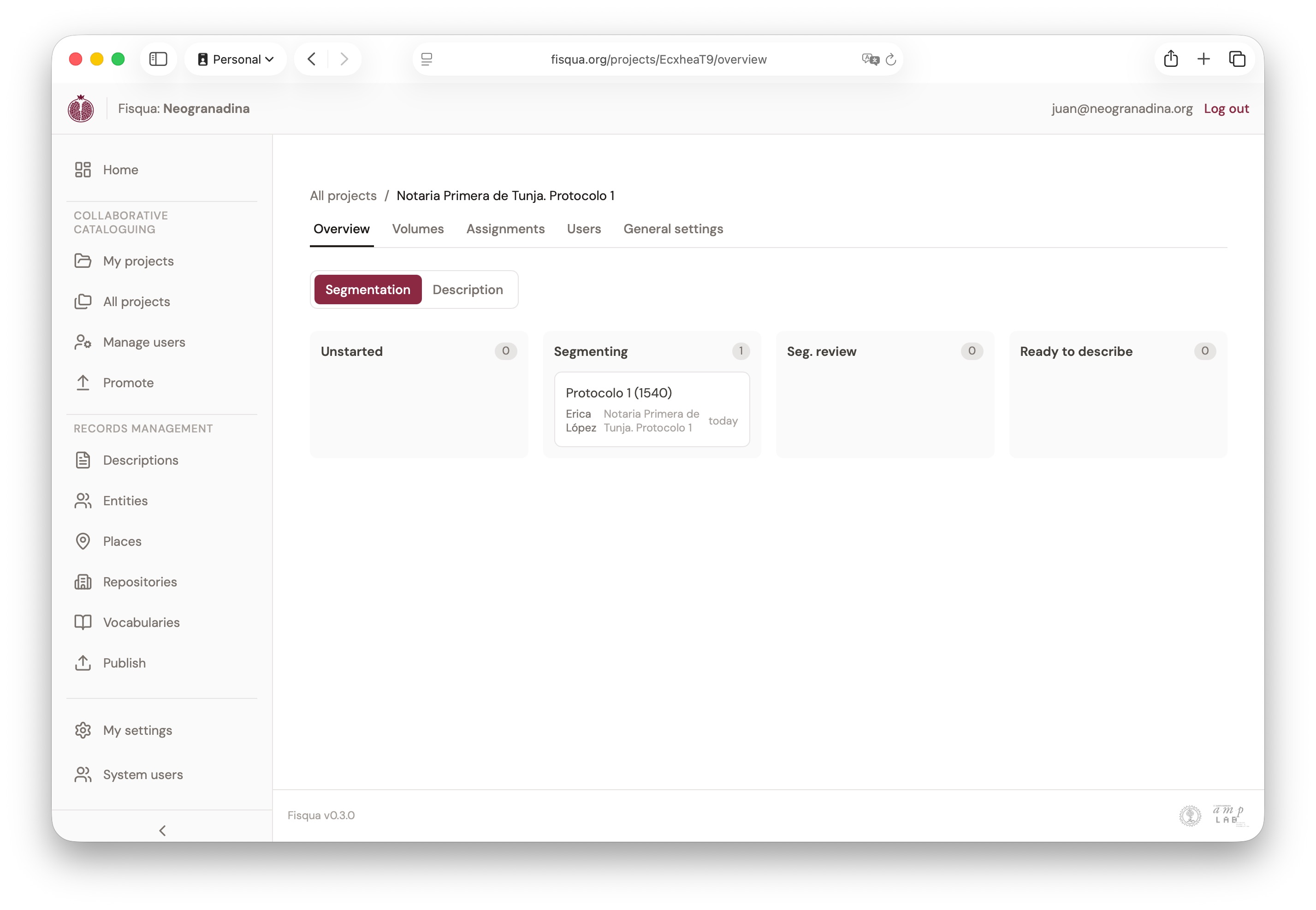
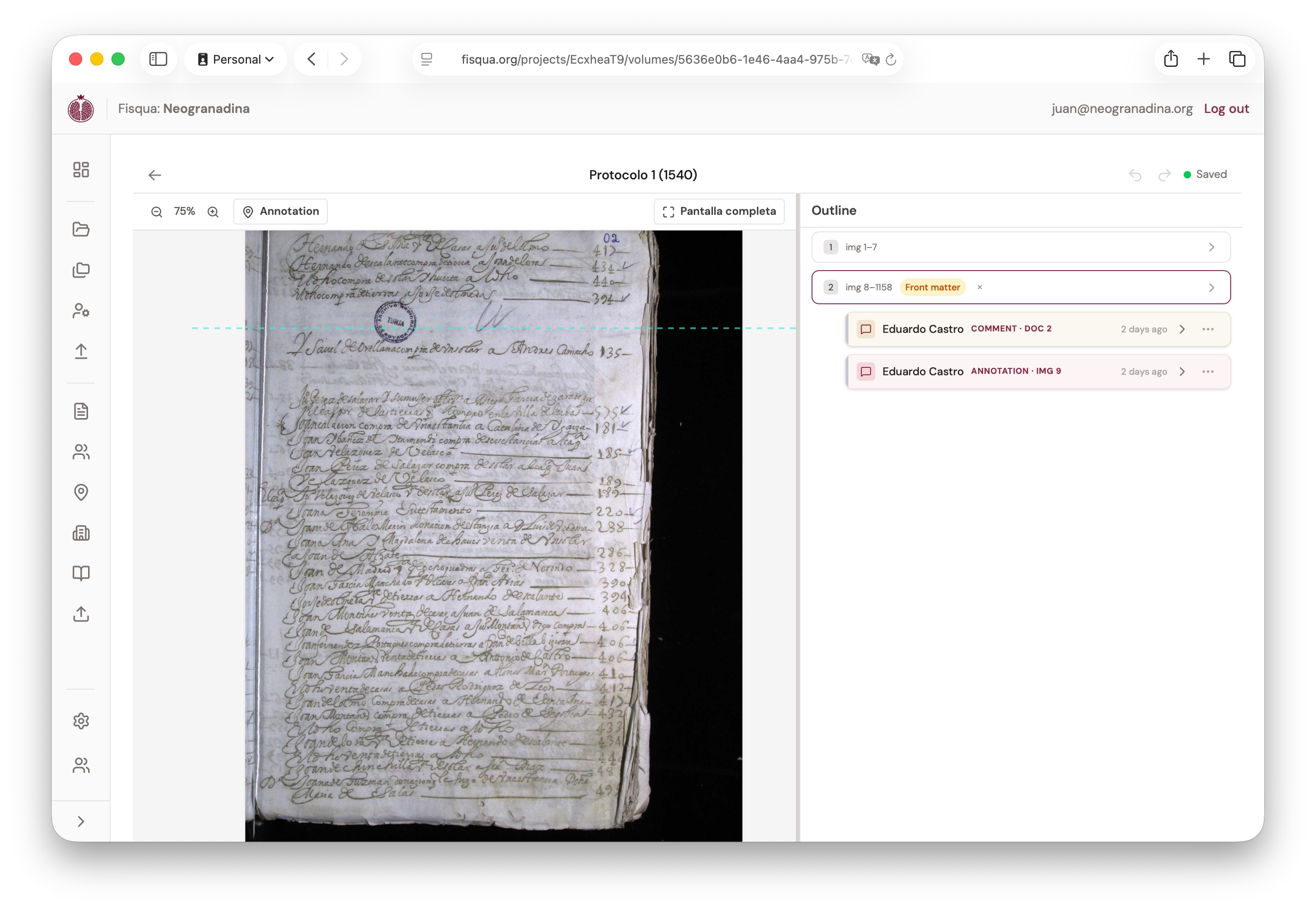
The hosted instance is already in use. It supports the cataloging work of Neogranadina across five partner repositories in Colombia and Peru — ranging from community-held collections to the Peruvian National Library, and comprising over 106,000 archival descriptions in total — as well as AMPL’s own cataloging. Further partner deployments are planned through UCSB’s Robinson Archives Initiative, a collaboration with community archives of social movement histories in the United States and beyond. Each partner keeps its own catalog within the shared hosted instance, sharing the infrastructure but never the data.
The name Fisqua comes from a Muisca verb meaning gathering scattered things, related to forms for searching, gathering, and traversing — a cluster of meanings that describes both the work the tool enables and the historical processes the resulting catalogs help document.
Thank you to Jairo Melo Flórez, whose Django-based prosopographical work at Neogranadina and AMPL — developed for the UC MRPI Routes of Enslavement in the Americas project and now powering Trayectorias Afro and the Sondondo Parish Records Project — first bore the name “Fisqua”.
Source code: Fisqua on GitHub.