Social Justice Archives of Medellín is a project to inventory and preserve the archives of the social justice movements that emerged in Medellín, Colombia, from the late 1950s, in the wake of the period of political conflict known as La Violencia. These movements sought political representation and defended human rights through organizing, as an alternative to armed struggle. Many of those involved were refugees forcibly displaced from the countryside, who settled in the informal neighborhoods — tugurios — that grew along the Medellín River and on the city’s outskirts, and there built coalitions of peasants, priests, students, and women to resist evictions and demand better living conditions.
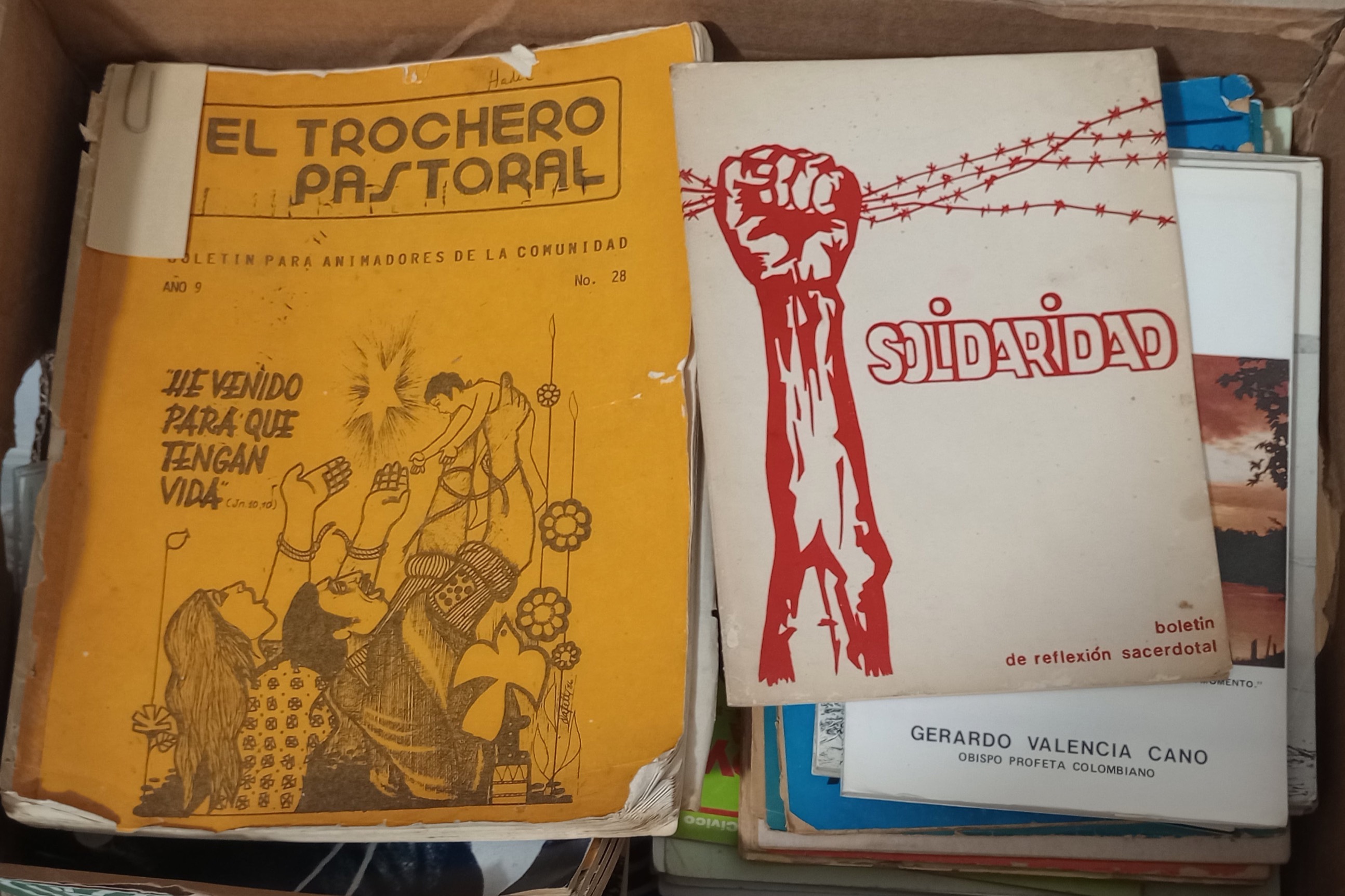
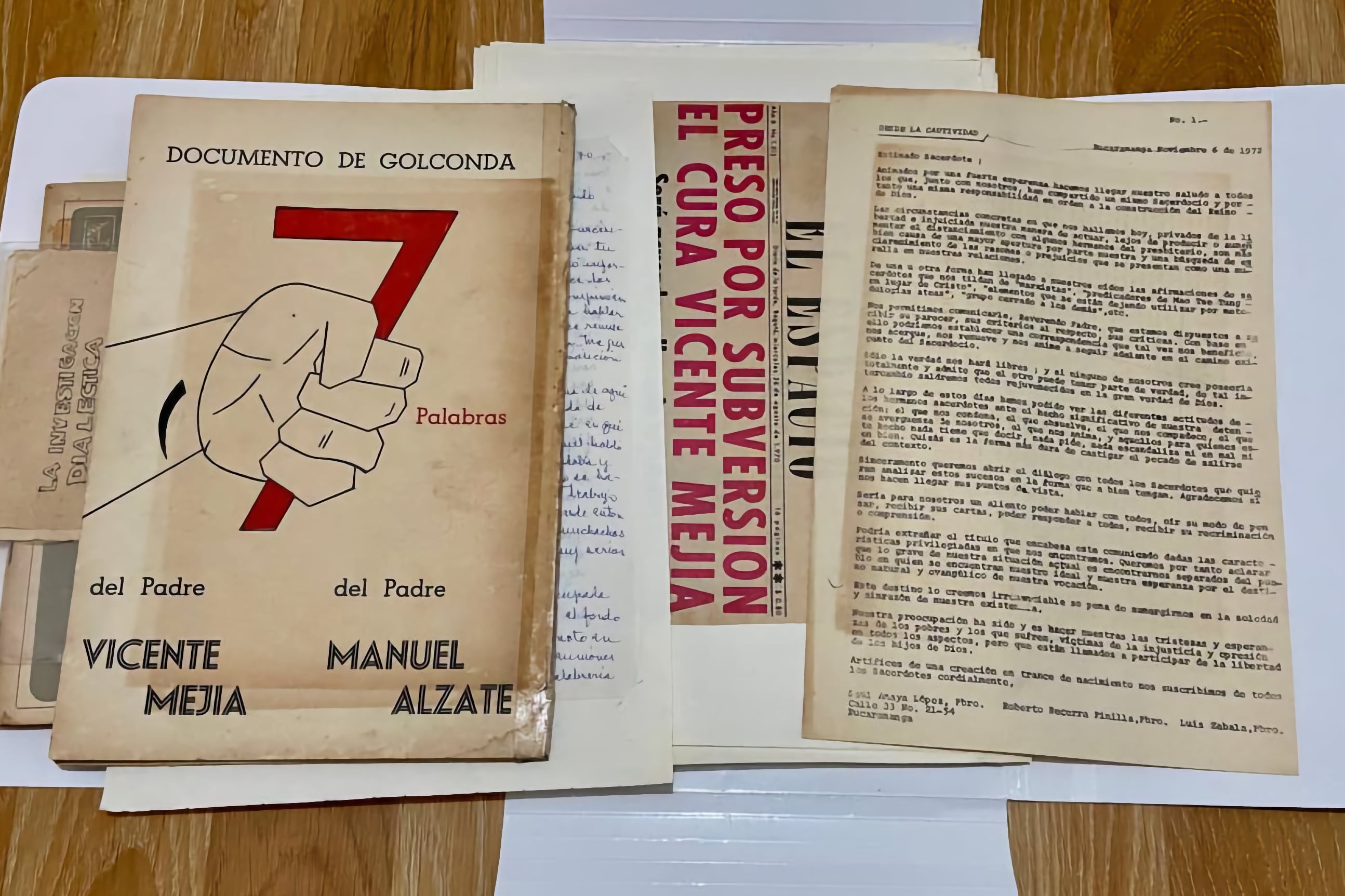
Komuni, an independent activist collective in Medellín, has taken on the task of gathering and preserving the archives of these movements. Its five thematic collections — Vicente Mejía Espinosa, Camilo Torres Restrepo and the Frente Unido, Golconda, Iglesia de los Pobres, and A Luchar — span 1958 to 2006 and include pamphlets, photographs, booklets, newspapers, audio recordings, meeting minutes, correspondence, ephemera, and born-digital files. The collective has safeguarded these materials for years; many are fragile, and dedicated cataloging and preservation work will help keep them safe and keep them doing their work in the present.
With a Planning Grant from UCLA Library’s Modern Endangered Archives Program (MEAP), we are working with Komuni to inventory and preserve the collections, to work out the rights associated with the materials, and to survey related collections of grassroots organizing in Medellín. Neogranadina provides training and technical infrastructure, with cataloging in Fisqua and the resulting inventory published open access by MEAP and on Neogranadina’s digital archive platform, zasqua.org, with a further copy deposited in the UCSB Library.
The inventory is a foundation for preserving and activating these archives: for Komuni’s community events and workshops, for scholars of social movements, urbanization, and human rights in Latin America, and for a future project to digitize the collections — so that the experiences these materials document, which remain at stake in Medellín’s ongoing struggles over land and memory, stay active in the city’s present.
Images: Materials from the collections, courtesy of Komuni.