Come work at the Archives, Memory, and Preservation Lab (AMPL) of the Center for Latin American and Iberian Research!
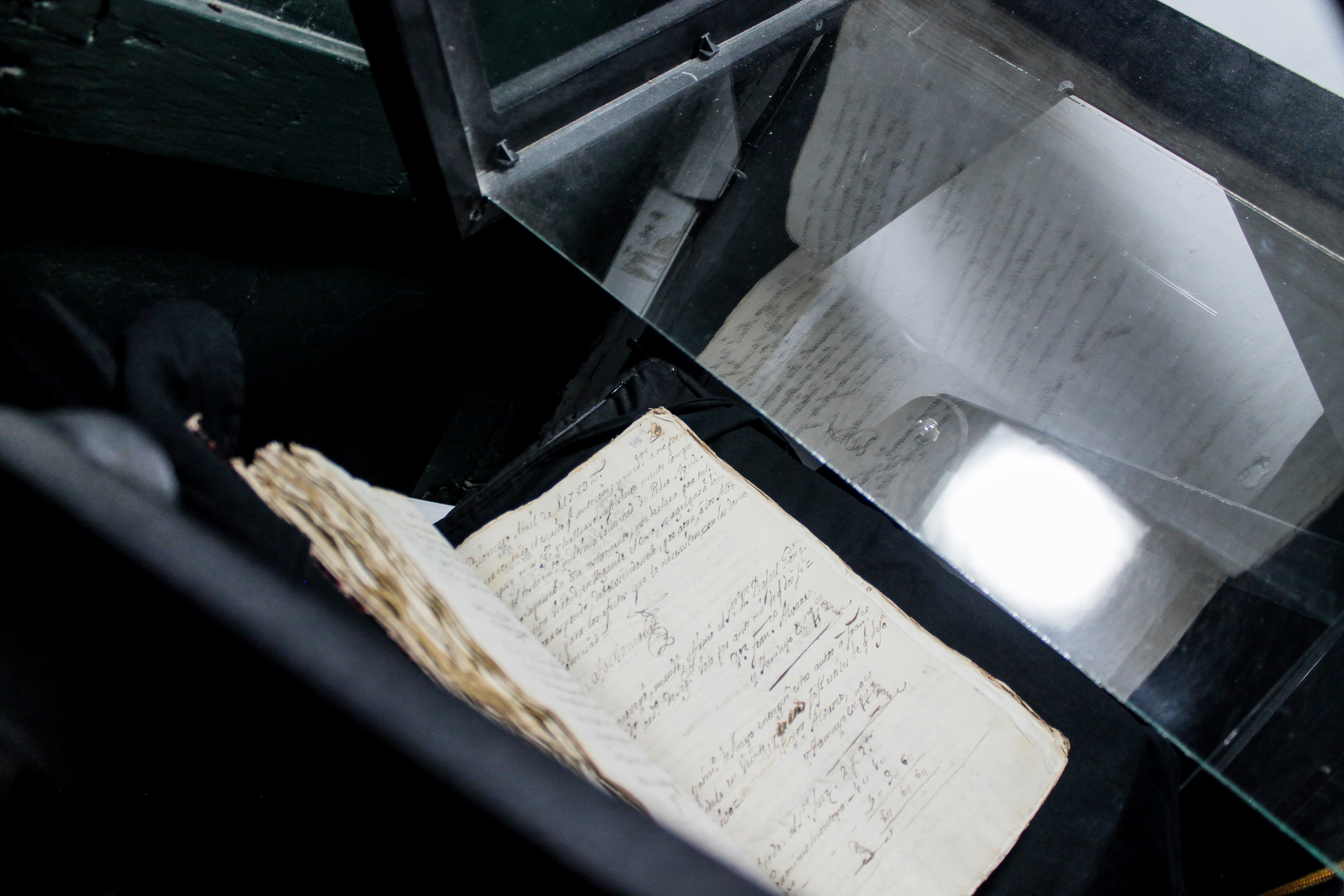
Want hands-on experience with real historical collections? At AMPL you will handle, digitize, and catalog newspapers, photographs, and personal papers from Latin America and the United States, alongside the communities and organizations whose histories they hold. We teach you the archival skills from the ground up: how to handle fragile materials, how to digitize them to archival standards, and how to describe them in our cataloging platform, Fisqua, where our team reviews your work before it enters the catalog. The collections you work on become available to researchers, students, and the public.
Current projects:
Archives of liberation theology in Medellín. From the late 1950s, families displaced from the Colombian countryside built their own neighborhoods in Medellín. There, peasants, priests, students, and women organized to resist evictions and fight for better living conditions. You will help the activist collective Komuni and the Centro de Desarrollo Cultural de Moravia preserve the archives of these movements, including materials on the priest Camilo Torres and the Frente Unido, Golconda, and the Iglesia de los Pobres.
Tools for community archives. Want to see how software gets used in the real world? You will help community organizations in the United States and Colombia start their own digital archives: setting up our cataloging and publishing tools for them, and helping to train their members to digitize and describe their own collections. This work is part of the Cedric and Elizabeth Robinson Archives Initiative, funded by the Henry Luce Foundation.
The Digitization Toolkit. Like building things? At AMPL we design, build, and test our own scanners for books and documents: low-cost, open-source machines that small archives and community groups can afford to build and run themselves. You will work on them with us and try them out on real collections, starting at the Santa Barbara Mission Archive Library. The project is funded by the National Endowment for the Humanities.
Some tasks involve Spanish; others do not. This is a wonderful opportunity to acquire and develop practical skills in managing, handling, digitizing, cataloging, and describing historical materials. Students who have worked on projects of this kind with us in the past have gone on to do amazing research on Latin America, even at graduate level.
Research assistants work about 3–6 hours a week, including a weekly lab meeting, and can receive course credit; some projects require a two-quarter commitment. To apply, see this position on UCSB’s Undergraduate Research Directory.